







.png)





















Ships stuck in Persian Gulf for over a month, crews plead for help
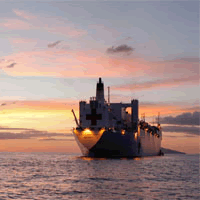
There are roughly 2,000 ships stranded in the Persian Gulf, carrying more than 20,000 seafarers, according to the International Maritime Organisation, as quoted by The Wall Street Journal.
Most vessels have remained stuck for over a month, as fewer than 200 ships have managed to pass through the Strait of Hormuz.
Global supply chain disruption
Under normal circumstances, about 20 per cent of the world's oil flows through the narrow Strait of Hormuz to global markets, along with critical supplies such as natural gas, fertiliser, and other cargo.
The resumption of normal traffic through the waterway remains uncertain.
Crews struggle with food and water shortages
Several ships are running out of fresh vegetables and freshwater, forcing sailors to share survival strategies via social media and very-high-frequency marine radios.
Some Chinese crew members have filmed themselves collecting condensate from air-conditioning units for bathing and washing clothes.
Others have resorted to fishing from their vessels, catching tuna, squid, and largehead hairtail for food.
Soaring costs and supply challenges
Restocking essential supplies has become both difficult and expensive.
The Port of Fujairah in the United Arab Emirates, a key resupply hub, has been repeatedly attacked.
Suppliers are charging significantly higher prices, with mangoes costing about $31 per kilogram and oranges around $15 per kilogram (roughly three pieces), according to The Wall Street Journal.
Crew change crisis deepens
Replacing or rotating crew members remains a major challenge, as flights to key transit hubs, including Dubai, are limited and costly.
The International Transport Workers' Federation, a London-based labour union, has received around 1,000 requests for assistance from crews near the Strait.
A growing number of vessels are running out of food, while about 200 seafarers have sought help to return home.
Source: Rediff
#theshippingtribune #latestnews #shippingnews #dailynews #Maritimenews #shippingindustry #news #media #newsupdate #maritime #shippingnewsworldwide
Related News
Shipping News
Leave Comments


Comments