






.png)












.png)






JSW Steel Q3 profit jumps nearly threefold aided by one-time gain
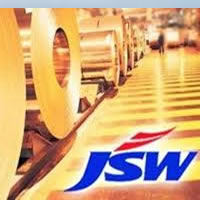
JSW Steel, India’s largest steelmaker by domestic capacity, reported a nearly three-fold jump in net profit for the December quarter on the back of a one-off tax gain.
The company reported consolidated net profit of Rs 2,139 crore for the quarter ended 31 December 2025, up sharply from Rs 717 crore a year ago. The profit beat the Rs 1,406.7 crore projection of 13 analysts polled by Bloomberg.
The reported profit includes a one-time deferred tax gain of Rs 1,439 crore related to its Bhushan Power and Steel assets. Excluding this, the underlying profit would be about Rs 700 crore, roughly half of analyst expectations, a 2% decline from the same quarter a year ago.
Steel prices were at a multi-year low and adversely impacted realizations, Jayant Acharya, joint managing director and chief executive officer (CEO) of JSW Steel, said in a post-earnings interaction with analysts. “Coking coal costs were higher by $1.05 in line with our guidance, while iron ore provided a slight cost benefit due to better blends,” he said.
JSW Steel, in a statement, said that the new labour codes led it to recognise a one-time exceptional charge of Rs 529 crore, consolidated, towards higher employee benefit obligations.
The Mumbai-headquartered company reported an 11% jump in revenue from operations of Rs 45,991 crore compared to the same period a year ago. The company's adjusted Ebitda was up 22% compared to the same period a year ago and stood at Rs 6,620 crore, with a Ebitda margin of 14.4%. The adjusted Ebitda increased was driven primarily by higher volumes and lower coking coal and power costs, partly offset by lower realisations. While reported Ebitda was Rs 6,496 crore during the quarter.
The adjusted Ebitda excludes unrealized forex gains and losses on long-term borrowings, net of unrealised forex gains and losses on intercompany receivables.
“The net profit rose sharply, but much of the increase was driven by a one-off gain from Bhushan Steel’s deferred tax assets,” said Mohd Sheikh Sahil, associate analyst for metals and mining at IDBI Capital Research.
JSW Steel’s domestic sales stood at 6.59 million tonnes, and exports increased by 53% to 0.84 million tonnes, compared to the corresponding quarter a year ago. Exports contributed 11% to the sales from the Indian operations for the quarter.
The company also approved a 50:50 joint venture with JFE Steel, Japan, transferring Bhushan Power and Steel’s steel business to JSW Sambalpur Steel through a slump sale for Rs 24,483 crore, with Competition Commission of India (CCI) approval on 20 January 2026. The transaction is expected to generate significant capital gains, prompting recognition of a one-time deferred tax asset of Rs 1,439 crore from previously unrecognised unabsorbed depreciation. This non-recurring tax credit boosts reported profit but does not impact underlying earnings.
Unabsorbed depreciation represents earlier years’ depreciation that couldn’t be offset against taxable income. Under Indian law, it can be carried forward indefinitely and used against future taxable income, including capital gains. In this case, the upcoming capital gains make its utilisation likely.
“The weakness in the December quarter was largely due to very low steel prices, which weighed on realisations. On a quarter-on-quarter basis, higher material and staff costs further pressured margins, even though power and fuel costs declined. Both coking coal and iron ore contributed to the rise in material costs,” IDBI’s Sahil said.
In November, the prices of steel used in cars and home appliances fell to a nine-month low in India and that used in construction and infrastructure to a near-five-year low. The decline was driven by oversupply and weak demand from large infrastructure projects. Sentiment was further dented after a temporary safeguard duty lapsed on 7 November, with no clarity on an extension until the end of December.
Prices have since stabilized after the Union government announced a 12% safeguard duty for three years on 30 December, giving steelmakers the confidence to raise prices twice within two weeks of the announcement.
JSW Steel said its board has approved setting up a 5 million tonnes per annum (MTPA) steel plant at a new site in Jagatsinghpur, Odisha. The project will be executed through its subsidiary, JSW Utkal Steel Ltd, and will involve a capital expenditure of Rs 31,600 crore, with commissioning targeted by FY30. This is the first phase of the project, with scope to expand capacity to 13.2 MTPA at the site.
JSW Steel’s Odisha project of 5 MTPA “is very conducive for exports” and the company will be looking to tailor the product mix to look at some of the export requirements as well, Acharya said.
In line with the steelmaker’s strategy to enhance downstream capabilities to address market requirements, the board has approved a 0.2 mtpa tinplate and 0.36 mtpa continuous galvanising line at the existing downstream plant in Rajpura, Punjab.
Downstream refers to processing steel to create value-added products rather than simply selling it as raw steel. A tinplate unit produces thin steel sheets coated with tin, mainly used for food cans and packaging, while a Continuous Galvanising Line (CGL) coats steel with zinc to prevent rust and is used in appliances, construction, and the automotive sector.
JSW Steel’s consolidated capex spend during Q3 FY26 was ?3,482 crore, and for the first nine months of FY26 it was Rs 10,018 crore. The company expects to spend Rs 15,000-16,000 crore during FY26.
India’s steel consumption continued to grow, with a 9-month growth of about 7%. Looking ahead to FY27, demand is projected to grow at 7–9%, Acharya said. “The Q4 margin should be better on the back of higher steel prices, supported by seasonally strong demand,” he added.
“The prices of steel have started moving and have started recovering from the multiyear lows in the last quarter. At the end of December, we saw prices moving by about Rs 1,500 per tonne. At the beginning of January, it moved by about Rs 2,000 per tonne. We see some recovery possibility during this quarter as we move ahead,” said Acharya.
The company has also charted a plan to spend Rs 1 trillion over the next 4 to 5 years.
Regarding Europe’s carbon tax policy, or the Carbon Border Adjustment Mechanism (CBAM), Arun Maheshwari, CEO of the JSW Group, told analysts that the policy's impact is not specific to India but applies to all exporters to Europe.
“The overall real-time impact assessment is yet to come because it's still very new. People are still understanding the impact,” Maheshwari said, adding that at present they export around 1.2-1.3 million tonnes to Europe.
Acharya pointed out that Europe's share of the company’s total exports is going down.
The company is currently completing its emissions certifications. These certifications will be conducted at the asset or plant level, not at the company level, in line with CBAM requirements. Exports made during calendar year 2026 will require emissions certificates to be submitted after the end of the year.
The steelmaker’s sales volumes also rose by 14% to 7.64 million tonnes, compared to the same period a year ago, with capacity utilisation of 93% in India, excluding the Blast Furnace 3.
Consolidated crude steel production increased 6% year-on-year to 7.48 million tonnes, supported by the ramp-up of the Vijayanagar Metallics project, though sequential production dipped due to the shutdown of Blast Furnace-3 at Vijayanagar for capacity expansion.
Source: Livemint
#theshippingtribune #latestnews #shippingnews #dailynews #Maritimenews #shippingindustry #news #media #newsupdate #maritime #shippingnewsworldwide
Related News

Shipping News
Leave Comments


Comments