






















MARITIME BUSINESS LEADERS









BREAKING NEWS
Kerala’s new maritime goals
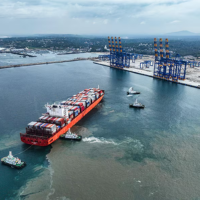
The announcement that Kerala will pursue a port-led growth strategy is a welcome step, but its success will depend on the creation of a comprehensive maritime ecosystem rather than merely expanding port infrastructure for cargo loading and unloading.
Singapore offers the best model for Kerala to emulate. Beyond cargo handling, it has built a global maritime hub around bunkering or fuelling of ships (around 45 million tonnes), freshwater supply, supply of ship stores (victualling), waste collection, ship repair, supply of spare parts, crew changes and other marine services. These activities generate enormous employment and are supported by a seamless regulatory environment and a large fleet of barges providing ship-to-ship services. Supplying ships through barges on the seas saves the ships the time and effort needed to travel to the harbour, including port clearances and other formalities.
Cumbersome customs and immigration procedures in India, on the other hand, reduce our agility significantly. India imposes 5 per cent GST on bunkering, which forces our oil marketing companies to sell fuel oil in bulk to Singapore, which then does the higher-value retail bunkering to ships.
Kochi is well-placed to emulate the Singapore model. Access to high-quality bunker fuel from Kochi Refinery and world-class repair facilities at Cochin Shipyard give it the basic ingredients for a maritime services hub.
Similar capabilities can be developed at Vizhinjam through the public-private partnership model.
These measures, however, require strong support from the Central government through reforms in taxation, procedures and maritime regulations. Encouragi- ngly, the Maritime Amrit Kaal Vision 2047 identifies the Cochin-Vizhinjam port cluster as a strategic national hub, providing the policy foundation for coordinated action between the Centre and Kerala. The Kerala government invested around ?6,000 crore in the Vizhinjam project, but it cannot afford to fund more such projects.
The Gujarat Maritime Board has developed Mundra, Pipavav, Hazira and Dahej ports through a model where the concessionaire created the port infrastructure. GMB earns around ?1,700 crore a year from these ventures. Kerala must follow the Gujarat model for future port projects.
Viability
However, Gujarat has the advantage of tapping the vast north Indian hinterland for cargo. Future port projects in Kerala will have no such benefit. Moreover, coastal navigation becomes difficult during the monsoon. Given these constraints, there may be limited potential for major investments in newer ports on Kerala’s coastline.
On the other hand, there is significant potential in developing inland waterways in Kerala for freight, passenger traffic and tourism. For instance, it is estimated that 180–220 tanker trucks transport petroleum products daily from Kochi to Thiruvananthapuram, while 120–160 more trucks operate on the Kochi–Kozhikode route.
Diverting a substantial portion of this traffic to waterways would reduce congestion on the National Highways, lower pollution and improve road safety.
The usage of National Waterway-3 needs to be promoted, beginning with the already developed Kollam-Kottapuram stretch. The government should also push for the use of barges to transport hydrochloric acid between Travancore-Cochin Chemicals Ltd and Kerala Minerals and Metals Limited, and for the establishment of an HPCL oil depot at Chavara.
The NW-3’s tourism potential needs to be harnessed too. A waterfront tourism project comprising a resort with boating facilities could be developed by a private operator. Besides privately owned land, the investor will require long-term leases for government land abutting the waterway and the assured use of the waterfront.
Approvals for the leases, waterfront tourism, jetties and related infrastructure should be issued through coordinated district-level clearances rather than at multiple State levels.
The government should ensure continuous dredging services, navigation aids and enforcement against obstructions.
With coordinated reforms, private investment, efficient regulation and modern waterways, Kerala can build a thriving maritime economy to generate thousands of jobs, strengthen logistics and transform the State.
Source: The Hindu Business Line
#latestnews #theshippingtribune #maritimenews #kerala #maritimegoals
"



Comments