








.png)


















Strong Demand and Trade Protection Support Indian Steel Credit

Indian steelmakers’ credit profiles remain supported by strong domestic demand, firmer pricing and trade measures that are reducing import pressure, Fitch Ratings says. Demand from infrastructure, housing and manufacturing activity is supporting earnings and helping producers absorb higher input costs. EBITDA growth and stronger margins provide buffers against increase in balance-sheet leverage despite plans of high capex.
Indian steel margins should remain relatively resilient despite higher production costs. Coking coal and energy costs have increased due to supply shocks and higher energy prices related to the Iran conflict, but we expect producers to largely offset these pressures through higher steel prices. This should help preserve margins and sustain earnings momentum across the sector.
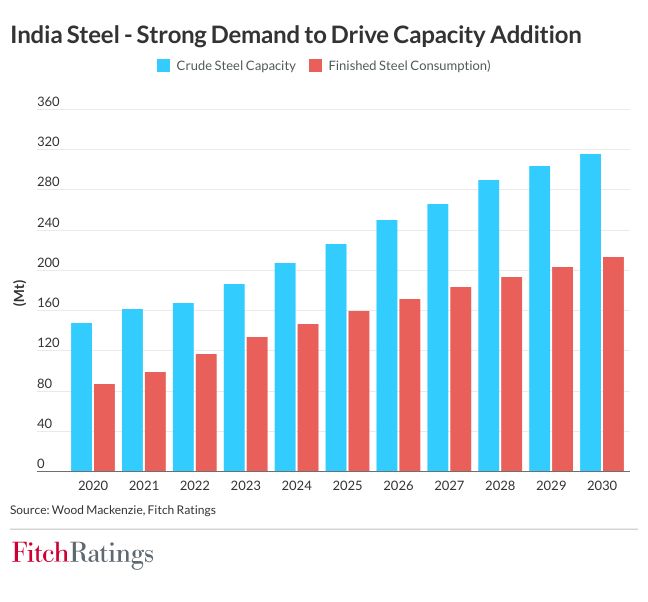
Strong domestic demand is supporting this margin resilience. Demand growth was around 8% in 2Q26, supported by infrastructure, housing and manufacturing activity. Fitch also expects finished steel consumption to continue to rise over the next few years, providing a favourable operating backdrop for steel producers.
Trade protection should continue to support domestic market conditions, although imports remain the main risk to profitability. A 12% safeguard duty on certain steel imports is helping domestic producers and supporting market conditions. Lower Chinese exports to India have also contributed to firmer local steel prices. Higher imports remain the key risk to margins if competitive pressure resurges.
Capacity expansion and strategic projects remain a feature of the sector, leading to elevated capital spending. We project India's crude steel capacity to rise by almost 40 million tonnes in 2026 and 2027, while finished steel consumption should also grow steadily over the same period. For example, JSW Steel (BB+/Positive) is targeting around 40% capacity growth over the next four years, and has also announced a joint venture with Korean multinational POSCO to develop a 6 million-tonne-per-annum integrated steel plant.
We expect higher capex to result in negative free cash flow generation; however, the financial profile should remain adequate as higher operating cash flow will fund a large part of the capex, reducing the need for additional borrowings.
Stronger issuers should remain best placed to convert supportive industry conditions into credit improvement. The recent rating upgrade on JSW Steel reflected higher EBITDA, stronger expected margins and debt reduction following the sale of Bhushan Steel assets into a joint venture with major Japanese steelmaker JFE Steel.
Source: Fitch Ratings
#latestnews #theshippingtribune #shippingnews #india #steel
Related News

Local News
Leave Comments


Comments