







.png)



















Structural Gas Demand Destruction Threatens Global LNG Market
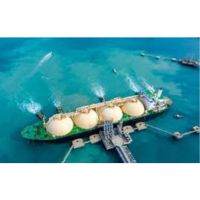
The impact of the war in the Middle East could lead to structural demand destruction on the world’s natural gas markets, the head of the Gas Exporting Countries’ Forum warned in the latest sign of the far-reaching impacts of the hostilities between the United States and Israel, and Iran.
The war has already disrupted international gas flows because of the Strait of Hormuz closure and the strikes on energy infrastructure in the Persian Gulf, which were Iran’s retaliation for U.S. and Israeli strikes that began at the end of February. Resumption of gas exports would take months, according to the GECF’s Philip Mshelbila—if the war ends soon. If it drags on, however, the effects of the supply disruption could become permanent.
“If the conflict ended today, the world would recover in six months to a year. But if it lasts six months, those knee-jerk changes we are seeing could become structural,” Mshelbila said, speaking at an industry event in Paris, as quoted by Reuters.
The executive also recalled that most predictions for the gas market saw it flipping into oversupply this year. The glut was, according to analysts, going to be the result of new capacity coming online in the United States while demand grows more slowly. “Clearly this conflict has done something to that, and it's not yet clear whether it's just a delay, or whether in fact that glut will ever come,” the secretary-general of the Gas Exporting Countries’ Forum said.
Even if a glut comes, it will not be coming anytime soon. The latest data for Asia suggests that imports of liquefied natural gas are on course to record their lowest monthly level in close to six years, Reuters’ Clyde Russell reported this week. The numbers come from Kpler and are evidence of demand destruction resulting from the war. In some cases, this is voluntary demand cuts, such as in the case of China, for instance. In others, such as Pakistan, the destruction is organic, prompted by the higher prices that LNG is fetching amid the supply cuts.
Asia is set to import some 19.03 million tons of liquefied gas this month, which would be down from 20.69 million tons for March and a seasonal high of 26.34 million tons for December 2025, the Kpler data showed. For China, however, the drop is much more marked, with the April total seen at 3.36 million tons. That would be down from 7.66 million tons for December 2025 and the lowest since April 2018, Reuters’ Russell noted.
With Qatari LNG mostly gone, importers are switching to U.S. gas and, to a lesser extent, Russian gas. Volumes from other producers are not changing, even though they have the resources, GECF’s Philip Mshelbila noted.
“Sadly while some African countries have excess capacity in both LNG and pipeline gas, the majority of them if not all are not producing at full capacity,” he said, adding that “If you look at the export pipelines to Europe, from Algeria or from Libya, not one of them is full.” Because of this, it is U.S. liquefied that is replacing most of the lost volumes from the Middle East.
The executive pointed out that this is because African LNG producers are operating below capacity, without elaborating on the reasons for that. However, Nigeria has been exporting more LNG to Asia since the war in the Middle East began, and there are plans in place to boost the capacity of its LNG plant from 22 million tons to 30 million tons.
Algerian gas deliveries to Europe are also on the rise—even before the war began. Last year, Algeria exported a total 39-40 billion cu m of natural gas via pipeline and as LNG. That represented 13 to 14% of Europe’s total gas imports, Euronews reported recently, comparing it to 12 billion cu m in Qatari gas imports, which translates into a share of between 7% and 9% of total gas imports.
The problem comes from the fact that Algeria could not boost its exports to Europe fast enough to plug the hole left by the force majeure at QatarEnergy’s Ras Laffan complex. Yet the North African country is making steps in that direction: earlier this week, Algiers launched an oil and gas tender for seven blocks, with bids due by November. This is part of the government’s plan to increase natural gas production to 200 billion cu m annually by 2030. The investment required to do this is estimated at between $50 and $60 billion.
Yet these are long-term plans, while the supply pain is quite immediate. It is this immediacy of the problem that could transform into chronic demand weakness. “Normally in a situation of crisis this is an opportunity: Fill it up! Seize the market! Unfortunately, we are missing out, because we don't have the upstream molecules to fill the infrastructure,” GECF’s Mshelbila said. “The reserves are there, but they are still in the ground.”
Source: Oil Price.Com
#theshippingtribune #latestnews #shippingnews #dailynews #Maritimenews #shippingindustry #news #media #newsupdate #maritime #shippingnewsworldwide
Related News

Shipping News
Leave Comments


Comments